
An independent overview of scholar-led protest initiatives, digital teach-ins, and academic labour actions in Canada since 2020.
What This Website Is
This website is an independent, third-party archival and analytical project focused on documenting scholar-led protest initiatives, digital teach-ins, and academic labour actions in Canada.
Our team created this project to preserve publicly available information, add context to key moments in recent academic activism, and offer readers a clear, research-oriented overview of how scholars, students, and university workers have used public education as a form of political engagement.
We approach these initiatives as historical and social phenomena shaped by specific political, institutional, and technological conditions. The goal is understanding and documentation, not participation or promotion.
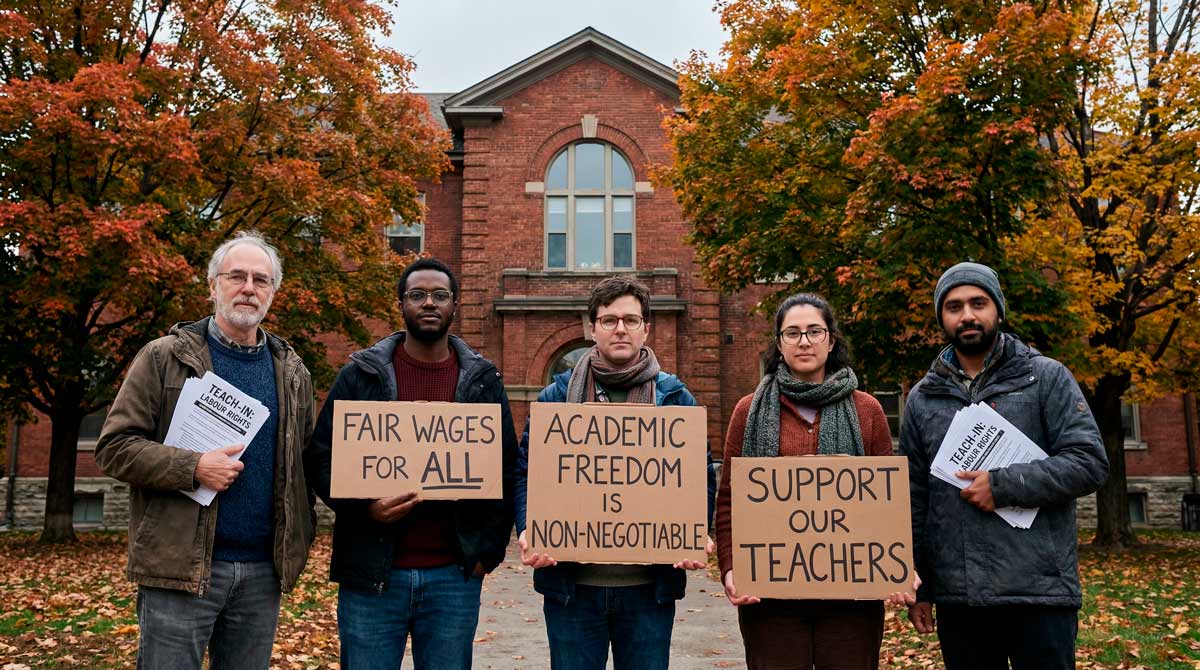
What We Do, and What We Don’t
We gather, summarise, and analyse publicly accessible information about scholar-organised actions, teach-ins, and protest formats that have influenced academic and public conversations since 2020.
This includes:
- clear summaries of events and programmes
- format-level analysis of digital teach-ins
- thematic overviews of recurring issues such as labour, policing, colonial governance, and academic freedom
What we don’t do matters just as much. This site does not organise events, issue calls to action, coordinate campaigns, or speak on behalf of any group or movement. Everything published here is written from an external perspective and meant strictly for informational, educational, and research use.
Why 2020 Matters
From our perspective, 2020 marked a turning point in how academic communities responded to overlapping social, political, and institutional pressures.
Pandemic restrictions pushed teaching and organising online, while renewed attention to racial justice, labour rights, and state power changed how scholars engaged with the public. Teach-ins, once mostly tied to physical campuses, became widely used digital spaces for shared learning and analysis.
Many of the initiatives we cover started during this period, and their influence still shapes how universities and academic communities think about responsibility, speech, and public accountability today.
How Content Is Created
All content on this site is based on publicly available sources. Our team works with archived webpages, publicly released programmes, media coverage, and institutional statements.
Rather than copying original texts or schedules, we focus on:
- summarising key information
- identifying patterns and recurring themes
- offering independent analysis
Event names, speaker names, and organisational titles are used only for clarity and identification. Whenever possible, archived sources are referenced to support accuracy and transparency.
Affiliation and Rights Notice
This website is not affiliated with Scholars Strike for Liberation, Scholar Strike Canada, or any related organisations, campaigns, or networks.
References to initiatives, events, or materials are made under principles of fair dealing for research, education, and commentary. Nothing on this site is published on behalf of any organisation.
If you represent an initiative mentioned here and have questions or concerns about how information is presented, our team is open to respectful contact for clarification or review.
Who This Site Is For
We built this project for researchers, students, journalists, educators, and anyone interested in the recent history of academic protest and public-facing scholarship in Canada.
By focusing on structure, context, and long-term impact rather than advocacy, the site aims to support informed understanding of how scholar-led initiatives emerge, evolve, and leave public records over time.